


Arcade.dev Joins the Open Secure AI Alliance for AI Safety and Security
NVIDIA has launched the Open Secure AI Alliance, more than 120 companies building open technologies for AI safety and cybersecurity. Arcade.dev has joined as a founding partner.

NVIDIA has launched the Open Secure AI Alliance, more than 120 companies building open technologies for AI safety and cybersecurity. Arcade.dev has joined as a founding partner.

Arcade.dev is now an ecosystem partner in the Cisco Duo marketplace. Teams running Duo can enforce their existing identity and access policies on every action an AI agent takes.

The new MCP release brings a stateless core, first-class extensions, and authorization hardening — and someone has to absorb that churn. Arcade.dev speaks both protocol versions on day one, and keeps authorization, security, and governance in the runtime rather than the wire format.
The 2026-07-28 MCP draft goes stateless: no handshake, no sessions, no server-initiated requests. Here's the day-one checklist of what an MCP client has to handle to support it, what to build or demand from your runtime, and why Arcade.dev is compatible on day one.

The 'A2A vs. MCP' debate frames a false choice. They're two different layers: MCP is the execution layer present on almost every agent, and A2A is the coordination layer you add only for multi-agent systems. Here's how to decide, and why Arcade.dev keeps the tool layer cleanly separate.

Over 39,000 agent skills scored on SkillBench, and three findings matter most: a passing grade isn't a safety guarantee, tool boundaries are where describing becomes acting, and popularity doesn't predict quality.

The skills ecosystem has grown to tens of thousands of published skills, but nothing judged their quality. SkillBench scores ~39,000 skills across six dimensions, from safety to tool boundaries, making it the largest graded index of agent skills anywhere.

Cisco Duo owns the policy. Arcade.dev enforces it on every tool call, from login scopes to a real-time Duo Push the moment an agent reaches for sensitive data.

Anthropic adopted Enterprise-Managed Authorization (EMA), a new MCP extension that lets identity providers grant server access centrally. Arcade.dev now supports it, and early access is open.
Every AI agent that connects to a business system inherits enormous trust. A new class of OAuth attacks shows why agentic AI security has to be built at the architecture layer — and why vigilance is an ongoing discipline, not a one-time fix.
Arcade.dev's agent-optimized MCP tools are now available in LangSmith Fleet, giving your agents access to 7,500+ reliable tools and secure auth infrastructure out of the box.
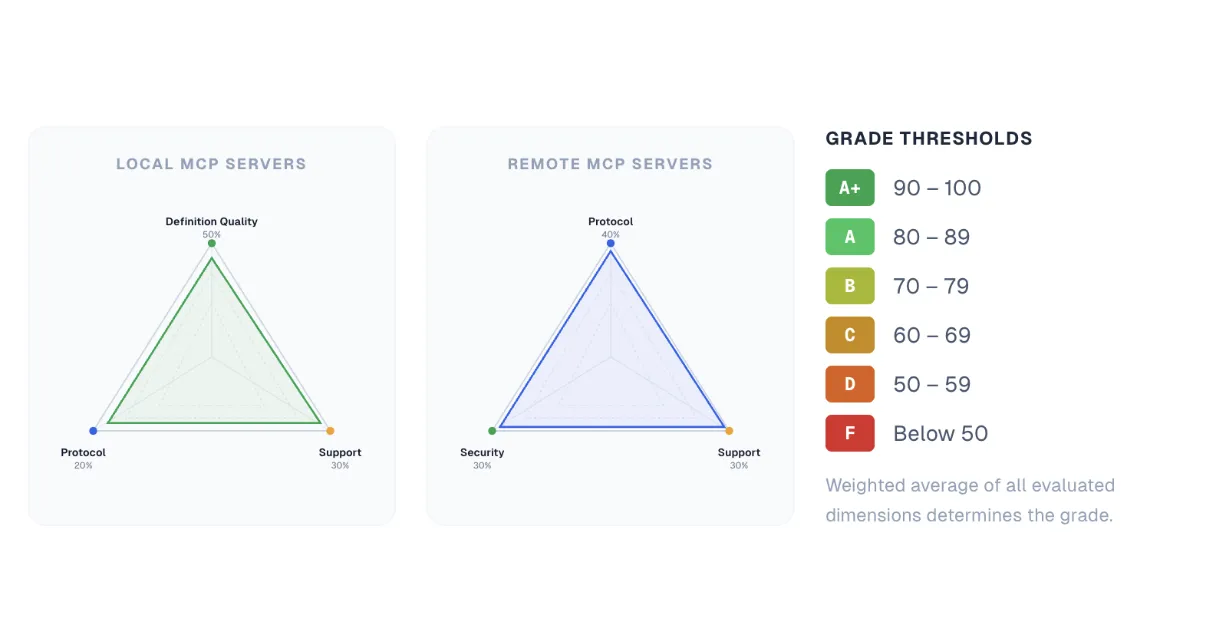
ToolBench grades every MCP server across definition quality, protocol compliance, security, and supportability. 41,902 servers indexed. Only 0.5% earned an A or above.
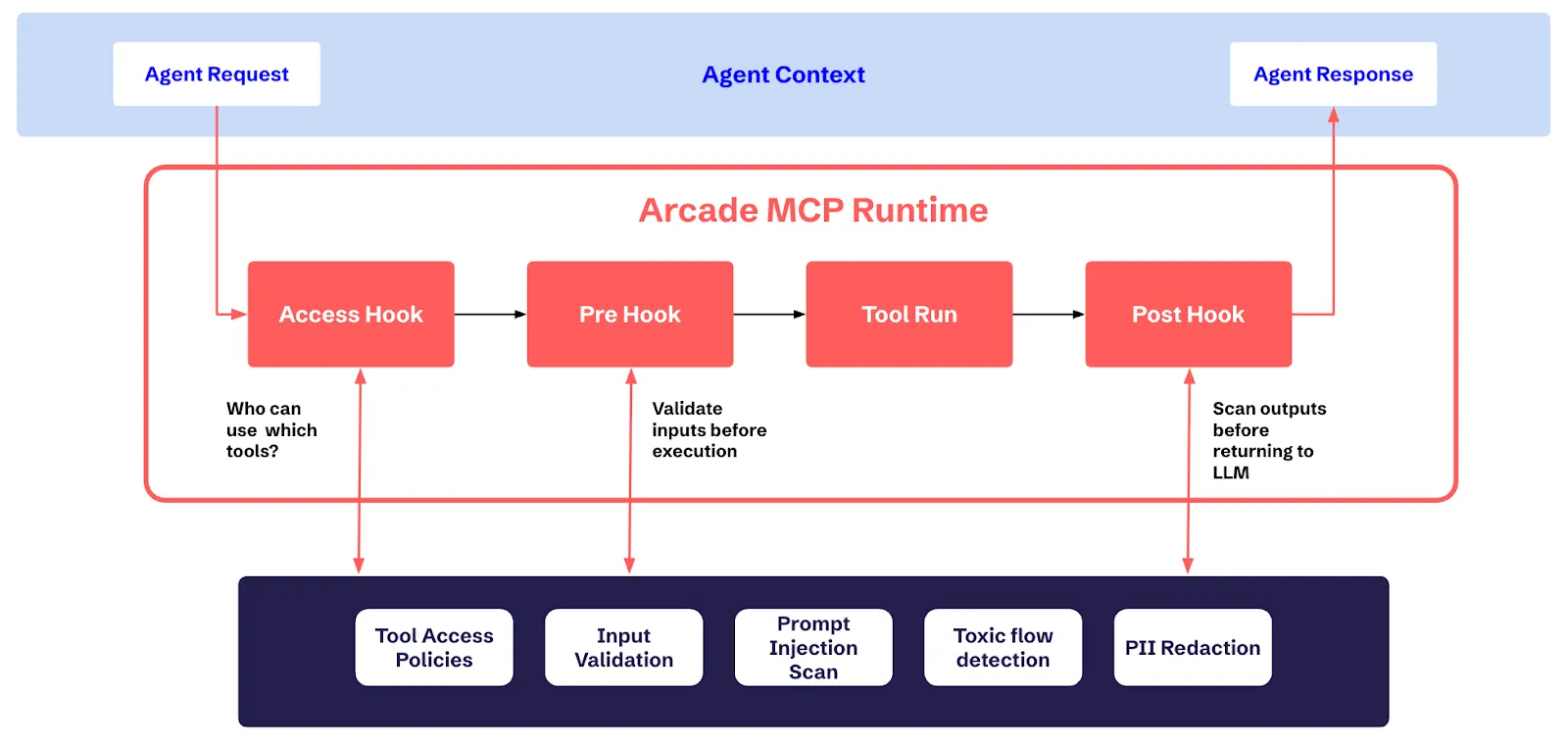
TL;DR: Arcade.dev protects AI agent tool execution with delegated identity, scoped tool access, and governance. Today we're extending that security model with Contextual Access: runtime hooks that let you inject your own security, compliance, and filtering logic directly into the tool execution pipeline across three hook points, via any webhook on every tool call.
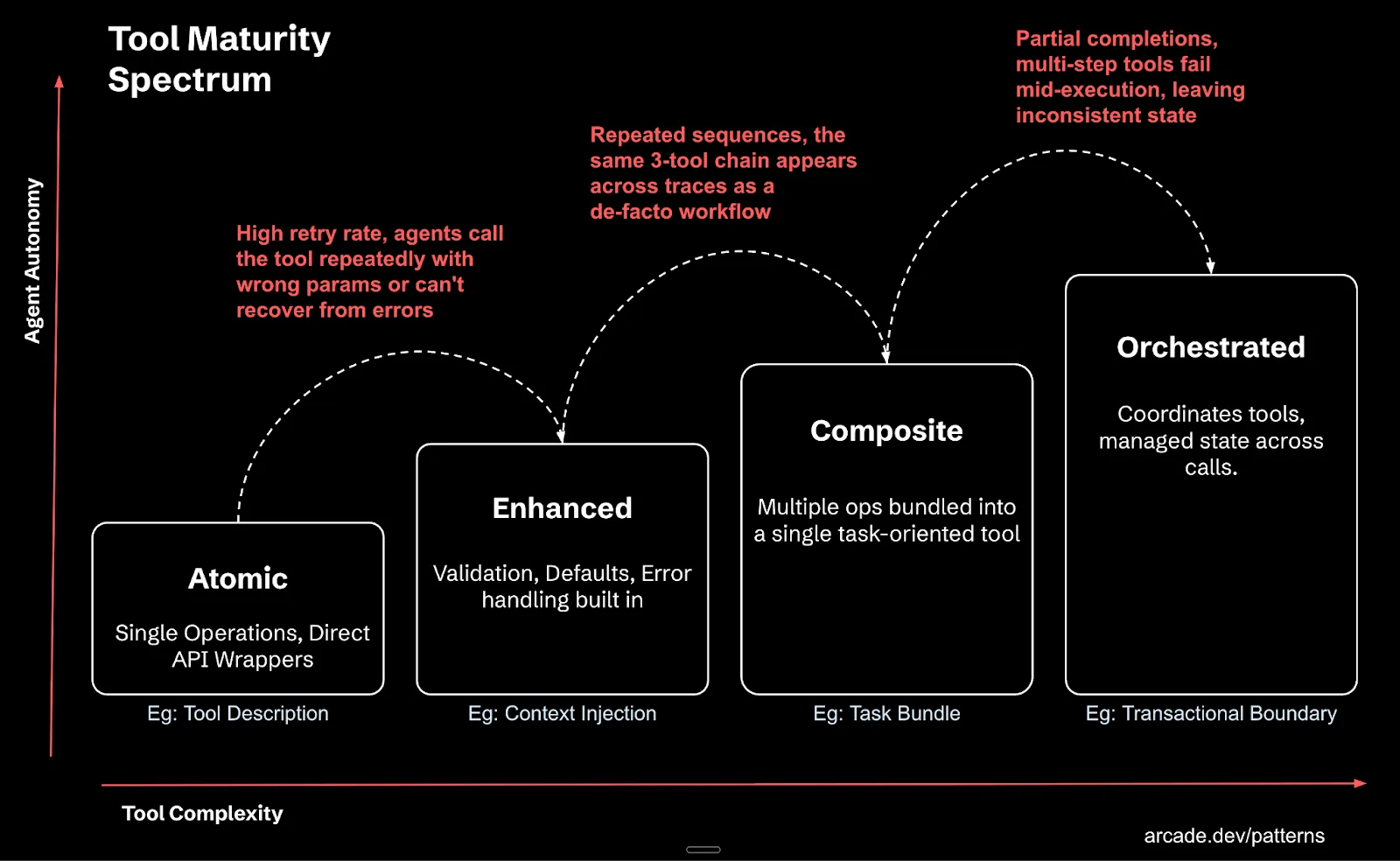
The Moment Every few years, a new pattern language emerges that changes how we build software. In 1994, the Gang of Four gave us Design Patterns. In 2003, Hohpe and Woolf gave us Enterprise Integration Patterns. Since then: Microservices Patterns, Cloud Patterns, and now Agent Patterns. But there's a gap. Agents can chat and reason on their own - but they can't ‘act’ without tools. Standards like MCP have unlocked how agents discover and call tools. The protocol layer is solved. What's missin
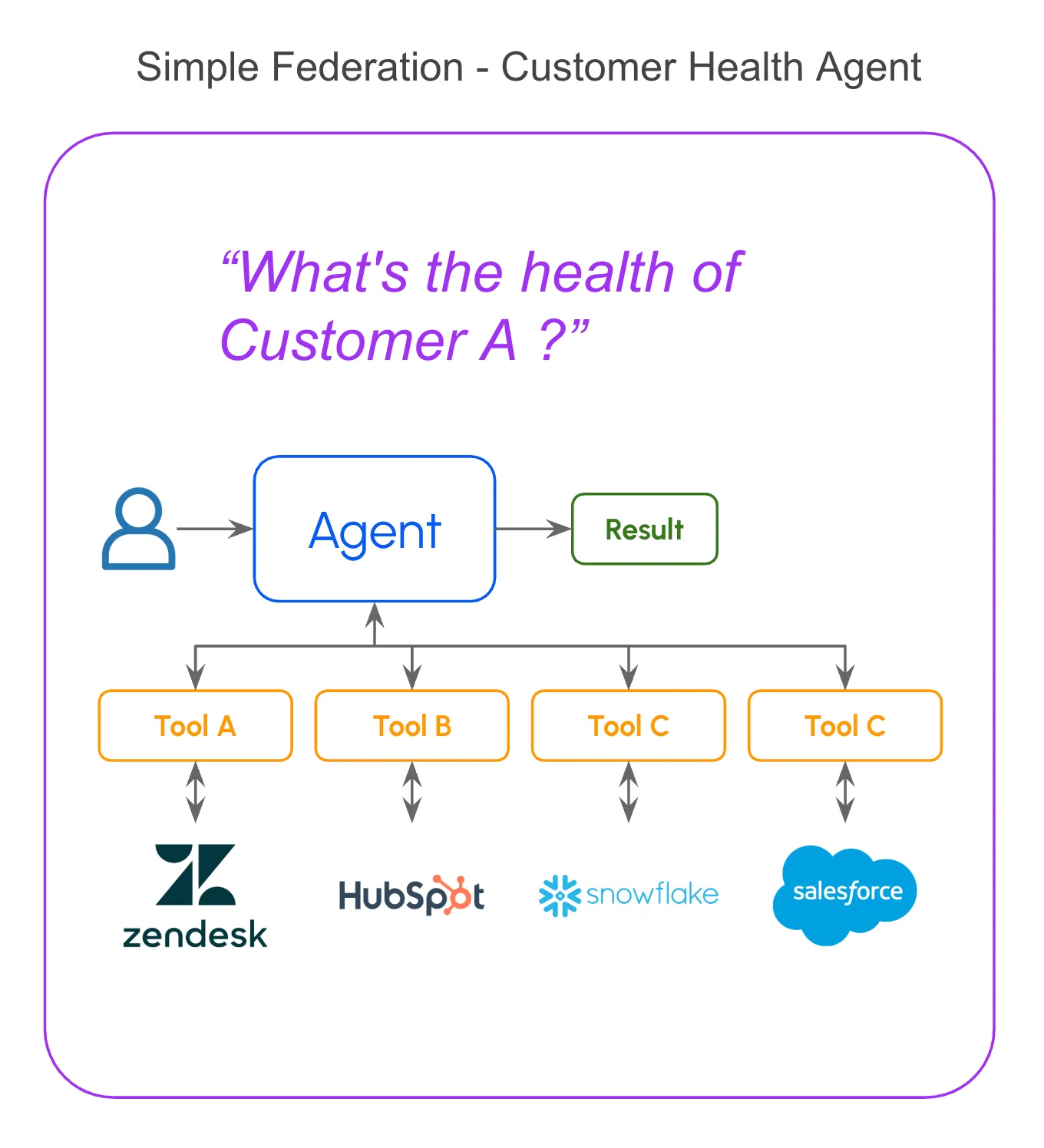
Before building vector infrastructure, consider federation: AI agents with tool access to your existing systems. For most enterprise use cases, that's all you need. Someone told you to pivot to AI. Add an AI layer. “We need to be AI-first.” Fair enough. So you start thinking: what does AI need? Data. Obviously. So the playbook writes itself: collect data in a central place, set up a vector database, do some chunking, build a RAG pipeline, maybe fine-tune a model. Then query it. Ship the chatb
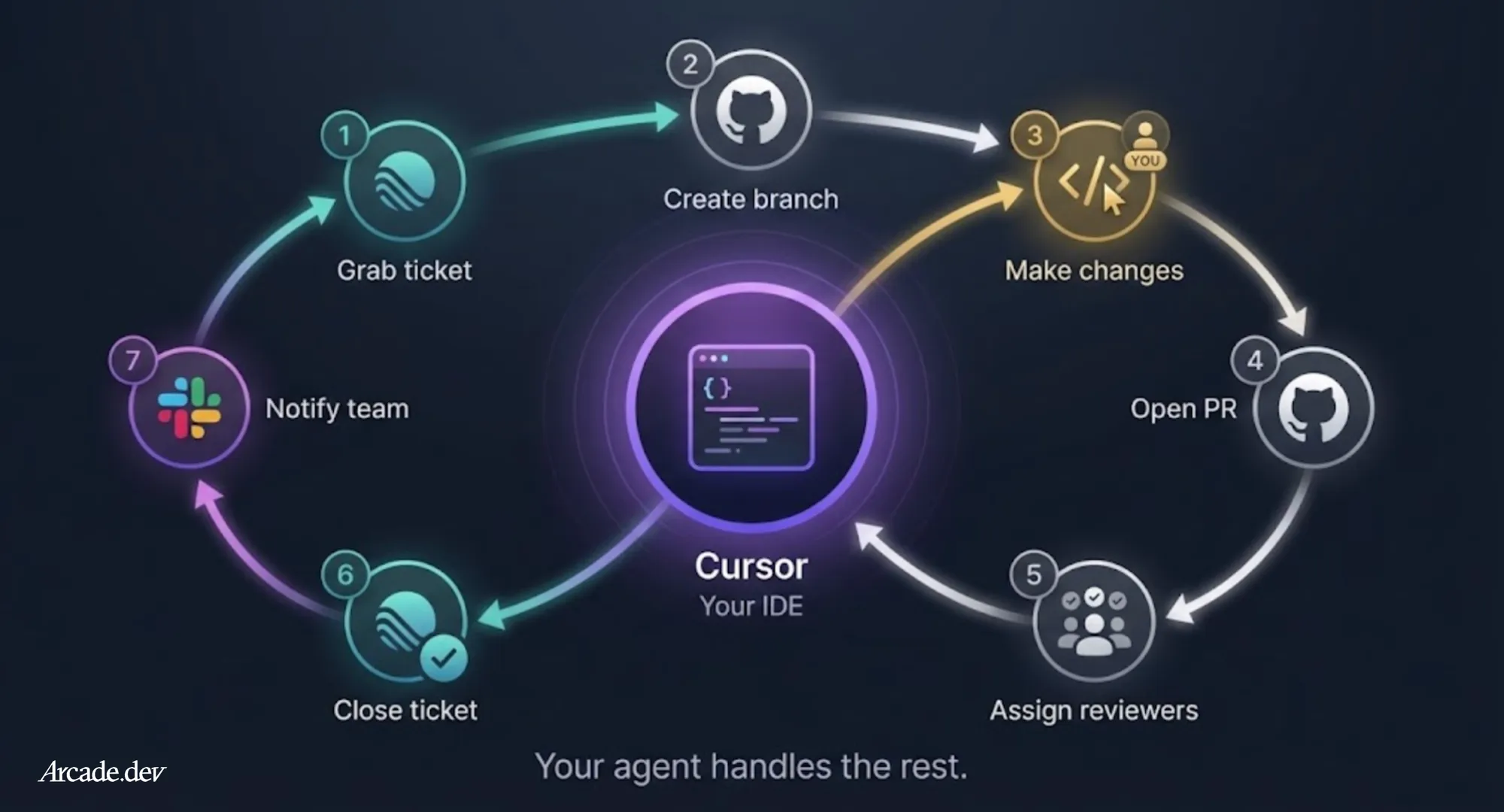
If you've been using Cursor, Claude Desktop*, VS Code, or any MCP-compatible client, you've probably experienced the same frustration: your agent is brilliant at reasoning through workflows, but the moment it needs to actually do something across your tools, you're back to juggling configurations for each individual tool, debugging auth flows, and troubleshooting why the setup that worked yesterday doesn't work today. Those days are over. With the launch of Arcade MCP Gateways, your MCP client